
Date: 30th Jan to 1st Feb 2026
Venue: World Trade Centre, Cuffe Parade, Mumbai, India
Theme: “Nurturing Communities and Transforming Lives through EMDR”
EMDR therapy has a profound impact on individuals, helping them heal from trauma and improve their mental health. However, the benefits of EMDR extend far beyond the therapy room. By empowering individuals, EMDR can foster stronger, more resilient communities.
This theme emphasizes that healing is not just an individual journey, but a collective effort. By working together, EMDR therapists can create a ripple effect of positive change, transforming not just lives but our communities as a whole.
Registration Details
Registration Includes: Conference Kit, Gala Dinner on 30th January, Conference Lunch on all days
Registration Excludes: Accommodation & Travel facilities
Accompanying Person – Conference days Lunch & Gala Dinner included
EARLY BIRD REGISTRATION EXTENDED Until 30th JUNE 2025
| Category A ($=USD) | Early bird | Regular | Spot |
| Dates | till 31 May 2025 | 1 June 2025 to 30 Nov 2025 | 1st Dec onwards |
| Conference | $180 | $225 | $260 |
| Preconference& Conference Package | $250 | $350 | $400 |
| Accompanying Person | $100 | $125 | $150 |
.
| Category B ($=USD) | Early bird | Regular | Spot |
| Dates | till 31 May 2025 | 1 June 2025 to 30 Nov 2025 | 1st Dec onwards |
| Conference | $375 | $420 | $500 |
| Preconference& Conference Package | $500 | $575 | $625 |
| Accompanying Person | $100 | $125 | $150 |
Category A: East European, South American, & Asian Countries not listed in Category B
Category B: All European, UK, USA, Canada, Australia, Hong Kong (SAR), China, Japan, Singapore & South Korea
*Note: Participant should pay the bank remittance fees and OUR Charges. The term “OUR charges” refers to a payment instruction in financial transactions, particularly in cross-border payments. When using the OUR instruction, the sender agrees to pay all transfer fees, ensuring that the recipient receives the full payment amount without any deductions for bank charges. This means that all fees associated with the transaction, including those from intermediary banks, are covered by the sender.
“All charges outside the beneficiary’s bank, including those of intermediary banks, shall be borne by the remitter. Please instruct your bank to send the payment with charge code ‘OUR’.”
Please add that in an international remittance forms there are 3 options :
1)—-
2)—-
3) OUR
Please select OUR so that the transfer fees is paid by you. In case of other options, we are also charged the transfer fees.
Kindly ensure that participants are responsible for the full amount transfer to the organizer.
Registration is inclusive of 18% GST
Group Discount: 1 complimentary registration on payment of 10 Registrations together, only applicable for Pre-conference & Conference Package.
Note: Group discount cannot be clubbed with Life Membership discount (for Indian Participants).
Payment Details
| Account Name | EMDR Association |
| Account Number | 925020019369497 |
| Account type | Current |
| Bank Details | Axis Bank Limited, Nariman Point Branch, Ground Floor, Maker Chambers IV, Mumbai – 400021, India |
| IFS Code | UTIB0000173 |
| Swift Code | AXISINBB173 |
Please Note: Kindly share the proof of transaction through mail for our reference. Mail: emdrasiamumbai@gmail.com
Contact Details
Committees
Committee Lists
| Committee | Chair | Members |
| Organizing Committee | Dr. Parul Tank Dr. Tri Ishwardani Sadatun |
Dr. Sushma Mehrotra
Dr. Dushyant Bhadlikar Dr. Mrinalini Purandare Dr. Deepak Gupta Mr. Chintan Naik Dr. Usha V Srivastava Mr. Syam Ravindran Ms. Nithya H M Rev. Chilton G Fernandez Ms. Kruti Shah Ms. Karishma Shah Savla Dr. Renu Sheth Dr. Anita Sukhwani Ms. Enakshi Kapur Ms. Riya Shah Ms. Sanskruti Joshi Dr. Pingkan CB Rumondor Dr. Zahrasari Lukita Dewi |
| Scientific Committee | Dr. Tri Ishwardani Sadatun
Dr. Mrinalini Purandare |
Dr. Sushma Mehrotra
Dr. Masaya Ichii Dr. Ann Parichawan Chandrasari Dr. Mahjabeen Haque Dr. Jinsong Zhang Dr. Khadija Tahir Dr. Mowadar Rana Dr. Zahrasari Lukita Dewi Dr. Dushyant Bhadlikar Dr. Shaheen Islam Dr. Usha V Srivastava Dr. Akiko Kikuchi |
| Finance Committee | Dr. Parul Tank
Ms. Indira Weerasinghe |
Dr. Tri Ishwardani Sadatun
Dr. Jinsong Zhang Ms. Nithya H M |
| Logistics & Hospitality Committee | Dr. Sushma Mehrotra | Ms. Enakshi Kapur
Dr. Renu Sheth Dr. Anita Sukhwani Ms. Karishma Shah Savla Ms. Kruti Shah Ms. Sanskruti Joshi Ms Trupti Vaid |
| Registration Committee | Dr. Parul Tank | Ms. Indira Weerasinghe
Mr. Syam K Ravindran Mr. Navneth Mendis Ms. Riya Shah Ms. Sanskruti Joshi |
| Website & Social Media Team | Mr. Chintan Naik | Dr. Zahrasari Lukita Dewi
Dr. Pingkan C B Rumondor Ms. Chrystella Lo Ms. Riya Shah Mr. Syam K Ravindran Ms Maithili Tank |
| Training Team | Dr. Sushma Mehrotra
Dr. Tri Ishwardani Sadatun |
Dr. Ann Parichawan Chandrasiri
Dr. Dushyant Bhadlikar Dr. Parul Tank Dr. Masaya Ichii Dr. Jinsong Zhang Dr. Shaheen Islam Sr. Janet Nethisinghe |
| Vendor Committee | Dr. Sushma Mehrotra | Ms. Nithya H M
Dr. Syam K R Dr. Parul Tank Rev. Chilton G Fernandez |
| HAP bazaar | Sr. Janet Nethisinghe
Dr. Usha V Srivastava |
Ms. Anjali
Ms. Jackie Ms. Kanokwan Mrs. Yamini Joshi Mrs. Manisha Shah |
| HAP Store | Ms. Lori Pereira | |
| EGA Booth | Dr. Marilyn Luber
Dr. Rosalie Thomas |
Keynote Address, Special Sessions and Panel Discussion
Keynote Session Abstract
31st January 2026
Keynote Address: Ms. Lori Pereira
Nurturing Communities and Transforming Lives through EMDR’: A Journey of Trauma Recovery Networks (TRN) & Establishing TRN in Asia
Chair: Dr. Tri Ishwardani Sadatun
For 30 years, Trauma Recovery/EMDR Humanitarian Assistance Programs (Trauma Recovery/HAP) has partnered with communities worldwide to increase access to effective, culturally responsive trauma care using EMDR Therapy. Founded in 1995 by Dr. Francine Shapiro, Trauma Recovery/HAP was created to ensure that individuals impacted by natural and human-provoked disasters could receive timely, evidence-based support rooted in local communities.
This workshop explores the historical foundations and global evolution of Trauma Recovery/HAP and its Trauma Recovery Network® (TRN) model, highlighting key lessons learned from three decades of humanitarian response. Participants will examine how coordinated systems, local leadership, shared standards, and strong partnerships lead to sustainable and ethical trauma care, particularly in disaster-prone and underserved regions.
Drawing on international examples, including work across Asia and Barbados, the session will illustrate how EMDR clinicians can move from isolated response to collective impact. Practical strategies for establishing and strengthening local and regional TRNs will be presented, with attention to cultural context, language, leadership development, and preparedness before disaster strikes.
Designed to inform and inspire, this workshop invites EMDR therapists to envision their role in building resilient communities and coordinated trauma response systems. Participants will leave with concrete steps and a clear pathway for action toward creating locally grounded, regionally connected Trauma Recovery Networks.
Keynote Session Abstract
1st February 2026
Keynote Address: Dr. Masaya Ichii
EMDR Trends in Asia: From Techniques to Clinical Ecology
Chair: Dr. Sushma Mehrotra
Abstract
This keynote examines survey data on EMDR practice across multiple Asian regions, focusing not on comparative evaluation but on conceptual integration. Results indicate that the Adaptive Information Processing model is broadly shared, while variations in clinical practice reflect contextual load, including institutional constraints and case complexity. Differences in bilateral stimulation, speed, and phase emphasis are best understood within a phase-oriented EMDR framework rather than as indicators of theoretical misunderstanding. The concept of clinical ecology is proposed as a lens for understanding EMDR development across diverse contexts in Asia.
Special Session Abstracts
1st February 2026
Special Session Speaker: Dr. Ann Kafoury
Loop Breakers: Interventions for Stalled Processing in EMDR
Chair: Dr. Mrinalini Purandare
Most EMDR clinicians encounter moments during the desensitization phase when processing seems to stall—clients repeat the same thoughts, emotions intensify without resolution, or the body remains frozen or over-activated despite several sets of bilateral stimulation. Rather than viewing these moments as resistance or protocol failure, this interactive session reframes looping as meaningful communication from the nervous system and from protective parts of the client’s internal system.
Drawing on EMDR, and Internal Family Systems (IFS) including somatic perspectives, this presentation explores practical “loop breakers” that help clinicians recognize when processing has stalled and to respond with curiosity, pacing, and relational attunement. Participants will learn how fear, over-activation, numbing, and protector parts commonly interfere with processing—and how parts-informed interventions can restore safety, Self-leadership, and forward movement.
Through lecture, clinical examples, brief demonstrations, and audience interaction, attendees will leave with concrete strategies for working skillfully with stalled processing while maintaining fidelity to EMDR’s adaptive information processing model.
Special Session Abstract
1st February 2026
Special Session Speaker: Dr. Sushma Mehrotra
Tracing the Roots: Working with Feeder Memories in EMDR
Chair: Dr. Parichawan Chandrasiri
EMDR practitioners aim to ensure smooth reprocessing and enhance healing of traumatic experiences. Most clients report relief and improved quality of life after receiving EMDR therapy. Studies indicate that EMDR therapy does not require several ongoing sessions compared to other talk therapies. With adequate fidelity 6-12 sessions bring positive results, even for complex trauma. However, when we as EMDR therapists get stuck as the clients either don’t benefit with our intervention as we have not hit the right target. Probably we usually go beyond the standard protocols and apply common methods for facilitating blocked processing (e.g., methods of using mechanics, memory component-TICES, body sensations and applying cognitive interweave). However, there are occasions when the clients experience inability to access and process the information which is consciously not available resulting in moments when both therapist and client are stuck. In this presentation, an attempt is made to use float back and affect scan creatively by using a combination of other methods for blocked processing, specially to access the feeder memories in a safe environment where fears, guilt and shame can be addressed safely.
This presentation will address the need to find ways to work with clients who face being blocked during reprocessing. With my 25 years of experience as a practitioner, trainer and consultant, I would like to share how to apply methods within the scope of AIP to access and reprocess feeder memories.
Panel Discussion
31st January 2026
Role of The EMDR Global Alliance
Panel Speakers: Dr. Rosalie Thomas, Dr. Marilyn Luber, Dr. Lori Pereira, Dr. Tri Iswardani, Dr. Sushma Mehrotra
Chair: Dr. Parul Tank
Call for Papers
Abstract Submission
6thEMDR Asia Conference, India, 31st Jan & 1st Feb 2026
Conference Theme: Nurturing Communities and Transforming Lives through EMDR
CALL FOR ABSTRACTS
The Scientific Committee of the 6th EMDR Asia Conference 2026 invites you to submit an abstract by 15 September 2025.
The scientific committee of 6th EMDR Asia conference,2026 is extending the date of abstract submission to 30th September 2025. Kindly encourage a large number of good quality research article submissions from EMDR practitioners from your respective countries
Submission of Abstracts to be sent to: emdrasiamumbai@gmail.com
Notification of Acceptance will be made by 15 October 2025.
Submission Documents Required:
- Submission Statement
- Abstract (limited to 250 words).
Guideline Instruction for Authors:
- Submissions to be sent electronically to Abstract Submission for 6th EMDR Asia Conference 2026 emdrasiamumbai@gmail.com
- Incorrect or incomplete submissions cannot be considered by the Scientific Committee until they are complete and definitive.
- Abstracts may be submitted on any of the 6th EMDR Asia Conference 2026 Scientific-theme areas listed below.
- Acceptance of abstracts will be based upon both their scientific and technical qualities and the clarity of presentation.
- Presenters are requested to indicate a preference for a specific type of presentation (Symposium/Oral presentation, workshop, or Poster).
- Guidelines for presentations will be sent upon acceptance of abstracts as per the discretion of Conference Scientific Committee.
- Please note that on behalf of the 6th EMDR Asia Conference’s Scientific Committee, it may not be possible to accept all the abstracts for oral presentation.
- The submission of an abstract, including all relevant parties (co-presenters) connected with the abstract, does not constitute registration for the conference. Registration requires the completion of the appropriate registration form and arrangements for the payments of fees. Co-presenters applying need to pay for conference registration.
- An individual submitting their abstract agrees that all work presented at the 6th EMDR Asia Conference 2026 must conform to discipline-appropriate national/International or professional ethical standards. Confirmation of adherence to this requirement is part of the proposal submission process.
- Each presenter can only submit one independent paper and one as a Co-Author.
- Once the abstract is accepted, the presenter will be requested to send the full Paper/PowerPoint Presentation/Poster adhering to the most updated APA publication guidelines (the 7th Edition) by 15 November 2025.
Themes and Sub-themes
Theme: Nurturing Communities and Transforming Lives through EMDR
Sub-Themes:
- EMDR and healing Across Life Span
- EMDR and Couples/ Family/ Systems Therapy
- EMDR and Psychological Disorders
- EMDR and Cultural Adaptations
- EMDR Case Studies
- EMDR and Research
- EMDR and Humanitarian Assistance Programmes /Disaster Response
- EMDR and Building Resilient Communities
- EMDR and Special Population
- EMDR Online Therapy
- Others
Pre-Conference Workshops
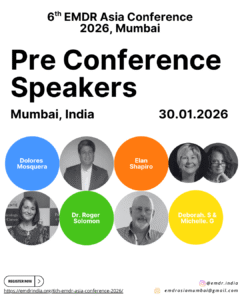
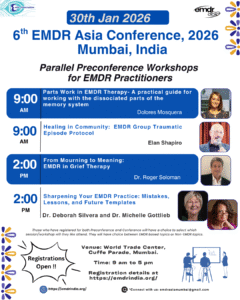
Pre-Conference Workshops – 30th January 2026
30th January 2026
Pre- conference Workshop 1101
Parts Work in EMDR Therapy- A practical guide for working with dissociated parts of the memory system
Dolores Mosquera
Chair: Dr. Tri Ishwardani Sadatun
Many therapists report problems in working with patients with complex trauma and dissociative disorders, especially in regard to developing the treatment plan, structuring the sessions, managing the patient’s internal conflict, and working with those parts of the memory system (parts) that are most challenging. When parts of the memory system are stuck in trauma and especially when these parts are not yet identified, it is easy to encounter a wide range of difficulties in therapy. Some of the main problems are related to the internal conflict experienced by these patients, who frequently show difficulties in regulatory capacities, distrust and hostility. Working effectively within EMDR requires uncovering the difficulties of this clinical population, and developing procedures and techniques to meet these challenges.
This workshop will review useful concepts to help therapists understand patients with complex trauma and dissociative disorders with an emphasis on working with dissociated parts of the memory system. A variety of strategies and techniques clinical work will be illustrated, allowing for safe interventions with various types of clinical problems and dissociative parts. A conceptualization model developed specifically for dissociative disorders will be presented, as well as adapted methods of working with parts of the memory system for other common and complex clinical difficulties (Mosquera, 2019).
Preconference Workshop 1201
Healing in Community: EMDR Group Traumatic Episode Protocol
Elan Shapiro
Chair: Dr. Masaya Ichii
The EMDR Group Traumatic Episode Protocol (G-TEP) was developed to harness the power of the individual Recent Traumatic Episode Protocol (R-TEP) for groups. Conceptualised as Guided Self-Help, it enables participants to work on the same or different traumas simultaneously, in a group framework, while allowing each person to process their own unique experience. It is a cost-effective evidence-based protocol for treating Traumatic Episodes that can be applied in everyday clinical practice for treating recent traumatic experiences as well as ongoing traumatic stress following adverse life-changing experiences for individuals, couples, families or groups. This approach not only makes trauma care more accessible and efficient but also helps reduce waiting lists. G-TEP provides a safe and structured environment for clients and a standardized manual for therapists. This program includes lecture, video illustrations and a guided practice.
Pre- conference Workshop 1102
From Mourning to Meaning: EMDR in Grief Therapy
Dr. Roger Solomon
Chair: Dr. Parul Tank
EMDR therapy is helpful in the treatment of grief and mourning. A significant loss (particularly under traumatic circumstances) can disable the ability to cope and compromise the ability to adapt. EMDR therapy can process the trauma of the loss and enable the linking in of adaptive information, ( e.g. positive heartfelt memories), giving the mourner a positive sense of connection. However, the mourner may have negative memories (unresolved trauma, losses, attachment-based memories that underlie response to loss) that can complicate the mourning process and EMDR treatment that need to be identified and reprocessed. This workshop will describe EMDR therapy treatment for grief and mourning, treatment frameworks that guide EMDR treatment, dealing with complications (e.g. mourner may equate losing the pain with losing connection to the deceased), and present videos that illustrate EMDR therapy with traumatic loss.
Pre-conference Workshop 1202
Sharpening Your EMDR Practice: Mistakes, Lessons, and Future Templates
Dr. Deborah & Dr. Michelle
Chair: Dr. Sushma Mehrotra
This is a two part workshop. The first part is focusing on how EMDR therapy is a very complex modality. It is easy to forget a piece or make an error. This workshop is going to cover many of those common errors and help you recover from therapist drift which occurs when clinicians fail to deliver the evidence-based practices, which leads to the therapy being less effective. Cultural factors often contribute to the errors that are made. This workshop will also go over some of these common cultural issues.
The second half will be focused on the Future template. During basic training, you were most likely taught the Future Template, and, like most people, did not understand it. This workshop will go over the scripting of Future Template, when do to use it within Standard Protocol, as well as other ways to use this amazing protocol. This will be an experiential workshop.
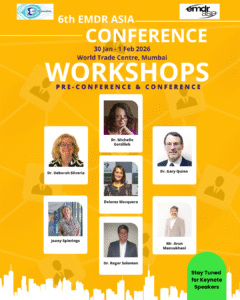
Conference
Tentative Schedule
Conference Workshops
Workshops 31st January 2026
Conference Day 1 Session 2101
Organizing the treatment plan in dissociative disorders: A practical guide for trauma Therapist
Speaker: Dolores Mosquera
Chair: Dr. Tri Ishwardani Sadatun
Many therapists report problems in working with patients with dissociative disorders, especially in regards to developing the treatment plan, structuring the sessions, or deciding how and what to manage to reduce the patient’s internal conflict and improve daily functioning. When parts are stuck in trauma, it is easy to encounter a wide range of difficulties in therapy. Having a guide to gather information (what, when and how) to understand and organize the therapeutic work is crucial.
This workshop will describe useful concepts to help therapists understand the challenges patients with dissociative disorders face and organize the treatment plan. A conceptualization model developed specifically for dissociative disorders will be presented, as well as a guide to carry out a treatment plan adapted to several common difficulties (Mosquera, 2019).
Conference Day 1 Session 2201
Breaking the Silence: EMDR with Survivors of Childhood Sexual Trauma
Speaker: Mr. Arun Mansukhani
Chair: Mr. Chintan Naik
Adult survivors of Childhood Sexual Abuse (CSA), often meeting criteria for Complex PTSD, bring unique and profound challenges to EMDR therapy. Among the most disruptive are two interwoven phenomena: a deeply entrenched negative self-concept and overwhelming feelings of disgust. Both serve as maladaptive survival strategies, offering a form of psychological stability in the aftermath of trauma, yet severely complicating therapeutic processing.
This workshop examines how these mechanisms operate entrenching shame and blocking the efficacy of standard EMDR interventions; and outlines essential modifications to the EMDR Standard Protocol to enhance therapeutic efficacy. Drawing on clinical experience and research, participants will gain a framework to recognize, assess, and address these barriers, while acquiring practical strategies to facilitate safe and effective processing.
Conference Day 1 Session 2301
Bridging Stuck Points: Mastering Cognitive Interweaves
Speaker: Joany Spierings
Chair: Sr. Janet Nethisinghe
Working with severely damaged clients, we can hardly expect EMDR-processing to go smoothly by itself. ‘Just staying out of the way’ is not enough to help these clients process their traumatic material. A more active approach is called for to bring trauma resolution. In EMDR, this type of intervening is called ‘(cognitive) interweaving’. The therapist may need to intervene on the process level with process interweaves, in order to keep the client within his window of (affect) tolerance. Or the therapist has to intervene on the content level with content interweaves, when the client gets stuck in a specific problem is unable to solve with the information he has available. In this workshop, the participant learns to use process interweaves to modulate the arousal level of the client. In addition to this a toolkit of useful content interweaves is presented, cognitive and non-cognitive, e.g. sensory, physical, humorous, symbolic and spiritual interweaves.The presentation includes metaphors for all kinds of blocks, bits and pieces of psycho-education for specific stuck points, unorthodox, creative or hilarious interweaves to get round resistance, and interweaves to bring reconciliation and forgiveness.
Conference Day 1 Session 2302
Depth vs Relief: Choosing Between Comprehensive Treatment and Symptom Reduction
Speaker: Dr. Deborah Silveria & Dr. Michelle Gottlieb
Chair: Dr. Tri Hadi
Clients begin treatment to feel better. Clinicians want to treat everything that has ever occurred in a client’s life. Hence the dilemma that many clinicians find themselves in: do we do symptom reduction or comprehensive treatment? There are many factors that help Clinicians make this decision, such as the length of time a client will be in treatment. client fragility or clients’ goals. This workshop will help the EMDR clinician more clearly understand these Mo treatment plan options and will help them work with their client to make the best decision for each individual client. The presenters will include recommendations for working with different ages and cultures.
Workshops 1st February 2026
Conference Day 2 Session 3101
Healing the Divided Self: EMDR with Structural Dissociation in Complex Trauma
Speaker: Dr. Roger Solomon
Chair: Ms. Linda
Trauma-related dissociation often results from childhood abuse and neglect from caregivers. The theory of Structural Dissociation of the Personality proposes that the personality can divide into dissociative parts, with one or more parts engaged in daily living (Apparently Normal Parts), and with one or more Emotional Parts (EPs) that hold the traumatic memories which are subsequently re-experienced and reenacted. Each part has its own first-person perspective. This workshop will present a broad overview of Phase Oriented Treatment, guidelines on working with the personality system (e.g. parts of the personality), and how EMDR therapy can be integrated into overall treatment.
Conference Day 2 Session 3301
Adaptive Progress: The unique & profound measure of change within the AIP model. How can we better understand and strengthen EMDR outcomes?
Speaker: Dr. Mark Nickerson
Chair: Dr. Rosalie Thomas
The Adaptive Information Processing (AIP) model provides the theoretical foundation for EMDR therapy, describing how traumatic experiences are stored maladaptively and how EMDR memory reprocessing can foster healing and resilience. Standard EMDR outcome indicators, such as reductions in Subjective Units of Distress (SUD) and increases in Validity of Cognition (VOC), while useful, offer only a limited view of client change within EMDR therapy. Clinicians and clients consistently observe more nuanced and profound shifts that Francine Shapiro, researchers, and clinicians have characterized as adaptive progress: movement toward healthier patterns of affect, cognition, behavior, and identity.
Adaptive progress indicators extend beyond symptom reduction to encompass reduced physiological arousal, diminished dissociative intrusions, enhanced tolerance of traumatic memories, increased access to adaptive information, greater separation of past and present, a more empowered sense of meaning and identity, and stronger interpersonal and community connections. These outcomes reflect the breadth of transformation made possible by EMDR and resonate deeply with the lived experiences of clients.
EMDR treatment deserves recognition for all that it fosters, not solely the alleviation of symptoms as defined by conventional diagnostic criteria in the field of mental health. Through presentation, brief exercises, and group discussion, this workshop will explore adaptive progress as a central and distinctive marker of change in EMDR therapy. Drawing on Dr. Shapiro’s writings, other EMDR literature, and clinical practice-based observations, participants will learn to identify adaptive progress indicators with greater clarity. By elevating adaptive progress as a signature measure of change, the AIP-informed EMDR approach can be advanced for its unique power to nurture communities and transform lives.
Conference Day 2 Session 3401
Trauma Based Addiction Case Conceptualization Using AIP Model (Conceptual Framework of EMDR Therapy)
Speaker: Tri Iswardani Sadatun & Zahrasari Lukita Dewi
Chair: Ms. Vera
Addiction has increasingly been recognized as a complex, trauma-related condition rather than solely a matter of maladaptive behavior or neurobiological dependency. Empirical evidence demonstrates that adverse life events and unresolved traumatic experiences significantly contribute to the onset, maintenance, and relapse of addictive behaviors.
The Adaptive Information Processing (AIP) model, as the theoretical foundation of Eye Movement Desensitization and Reprocessing (EMDR) therapy, offers a comprehensive framework for understanding the trauma–addiction connection. According to the AIP model, dysfunction arises when traumatic or disturbing experiences are inadequately processed and stored in a maladaptive form within memory networks. These unprocessed memories continue to influence perceptions, affect regulation, and behavioral patterns, thereby reinforcing addictive cycles as individuals seek immediate but temporary relief from distress.
This workshop aims to provide clinicians with a structured approach to case conceptualization in addiction treatment by applying the AIP model. Participants will understand the role of trauma in addiction through the AIP lens by:
- Learn how EMDR Therapy uses AIP to guide trauma-informed care.
- Apply a step-by-step framework for case conceptualization.
- Practice mapping trauma and addiction in real case examples.
- Introduction to various specific EMDR Therapy Protocols for working with Addiction
By bridging trauma theory, the AIP model, and clinical practice, this training is intended to equip mental health professionals with enhanced conceptual and practical tools to promote more effective, integrative, and sustainable outcomes in addiction treatment.
Gala Dinner & Fun N Fair
EMDR Asia invites you
Gala Dinner & Fun N Fair!
Food – Games- Fun
Friday, 30th Jan, 2026
7 PM onwards at PVM Gymkhana
Cooperage Football Ground, Maharishi Karve Road, Nariman Point, Mumbai
Map directions from world trade centre
Accommodation
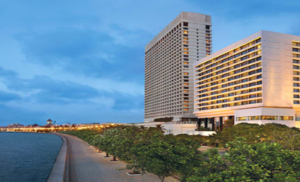
President, Mumbai
A legacy of stories, from Bombay to Mumbai, comes alive at President, Mumbai. Nestled in the neighbourhood of Cuffe Parade, the iconic 5-star hotel in Mumbai offers a seamless blend of heritage and contemporary elegance. Step into the grandeur of the lobby, where marble flooring, glittering chandeliers, and the enchanting notes of a live piano create a sensory symphony. Rise above the bustling city to rooms that frame dual sea views, surrounded by the city’s glittering skyline.
Why stay here : The President is 5 mins walk away from Conference Venue, World Trade Centre. It is near to the charms of south Mumbai, close to the museums, the over 100-year-old Gateway of India and the Marine drive waterfront.
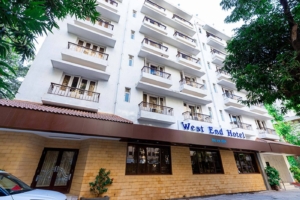
West End Hotel
West End Hotel is a budget friendly hotel in the town. It is approximately 10-15 mins drive away from the conference venue.
Travel Guidelines
Dear Attendee,
Wish you a happy, healthy, peaceful, and prosperous New Year!
The Mumbai EMDR team is looking forward to hosting you for the 6th EMDR ASIA Conference in Mumbai, India
Here are some guidelines to ensure a smooth arrival –
Know your Airport and Terminal
- Chhatrapati Shivaji Maharaj International Airport (CSMIA) –
- i) Terminal 2 (T2): Most of the International flights and some Domestic flights arrive here
- ii) Terminal 1 (T1): Some Domestic flights arrive here
- Navi Mumbai International Airport (NMIA): This new airport has commenced operations in December 2025 and is slightly away from Mumbai
Formalities Upon Arrival
- Immigration
After disembarking, all International travelers have to pass through Immigration, where Passport and Visa are checked and you may be asked details about your visit to India
- Collect your Baggage
Proceed to the Baggage claim area to collect your checked bags
- Customs
Walk through the customs area with your luggage. Officials may inspect your bags or ask questions before you exit
Connectivity
In CSMIA T2 terminal, Airtel and Matrix counters are located at the arrival exit (post-customs) for Indian SIM cards
In CSMIA T1 terminal and NMIA, SIM card kiosks are available in the arrival halls
You will need your Passport, Visa, and two passport sized photographs
Those of you who have International Roaming should activate it and check whether it is working properly, else get it checked at the SIM card counter
AFTER YOU ARE DONE WITH THE ARRIVAL FORMALITIES, PLEASE CONNECT WITH THE LEAD COORDINATOR OF YOUR WELCOME TEAM FOR FURTHER DIRECTIONS
Money Exchange (Forex)
CSMIA T2: Money Exchange counters offering multiple 24/7 currency exchange options are located in the Arrivals section (post-customs)
While convenient, airport rates might be less favorable than online options so compare rates from providers like MakeMyTrip or BookMyForex for better deals
CSMIA T1: Money Exchange counters are located in the main arrival concourse
Recommendation: Keep USD 50-100 in Indian Rupees (INR) for immediate needs. While many places now accept cards, a lot of Credit cards may not work in India. Cash is still essential for small vendors and some taxis. It is recommended that you bring Cash, either in USD or in Indian Rupees. You will find Money Changers at the Venue also to help exchange your cash in USD to cash in INR
Transport Options to South Mumbai (Hotel President/West End)
AT CSMIA TERMINAL 2 (T2):
- Private Taxi booked in Advance: Your welcome team coordinator will provide details of your taxi driver. The taxi driver will be waiting with a placard of your name outside Exit Gate 3 (Arrival Level).
Estimated Cost: INR 2,000-2,500 (~USD 30)
- Prepaid Standard Taxi: Visit the ‘Pre-paid Taxi’ counter near Exit 3 for traditional Black & Yellow Taxis which done have air conditioning or Blue taxi, which have air-conditioning.
. You can ask the counter assistant to allocate a taxi for your destination and they charge full amount except the toll tax of using sea-link of Rs. 100. They will give you the receipt and printed information with the car number and the telephone number and name of the driver.
You have to take an elevator to come down a level below to exit from the gates leading to taxi stands.
WE STRONGLY RECOMMEND THESE ECONOMICAL SERVICES & THEY ALSO HAVE CARS WITH WOMEN DRIVERS
Estimated Cost: INR 800-1,100 (~USD 10-15)
- Private Cabs: Visit the Private Cabs Counter like Alyte Cabs or book through Adani One App, located near Exit # 3
Estimated Cost: INR 1,500-2,500 (~USD 15-25)
- Car Rental: Visit the Private Operator counters like Akbar Travels, Shree Sai, etc. who provide your choice of vehicle, based near Exit # 3, next to prepaid counter
Estimated Cost: INR 2,000-2,500 (~USD 25-30)
- App-Based Cabs (Uber/Ola): Use the apps Uber/Ola and follow signs to the designated pickup point at Multi-Level Car Parking, specifically P4 for standard rides and P6 or P7 for premium rides
Estimated Cost: INR 800-2000 (~USD 10-25) depending on the time, traffic, and type of vehicle
- Mumbai Metro (Aqua Line 3): The newly operational underground line connects the airport directly to South Mumbai. A dedicated foot overbridge links the T2 terminal directly to the underground T2 metro station so it is just a 2 mins walk
For Hotel President: Board from CSMIA T2 metro station and alight at Cuffe Parade metro station. There are about 21 active metro stations between CSMIA T2 and Cuffe Parade. The first metro from CSMIA T2 to Cuffe Parade is around 06.40am and the last metro is around 10.40pm.
Cuffe Parade Metro Station to Hotel President is 2 mins walking distance
For Hotel West End: Board from CSMIA T2 metro station and alight at Churchgate metro station. There are about 19 active metro stations between CSMIA T2 and Churchgate. The first metro from CSMIA T2 to Churchgate is at 06.40am and the last metro is at 10.40pm.
Churchgate Metro Station to Hotel West End is about 10-15mins walking distance and about 5-7mins drive by the local black & white taxi
Estimated Cost of Metro Ticket: INR 70 (Less than USD 1)
Estimated Cost of Taxi from Churchgate to Hotel West End: INR 35 (Less than USD 1)
AT CSMIA TERMINAL 1 (T1)
- Private Taxi booked in Advance: Your welcome team will provide you details of your taxi driver. The taxi driver will be waiting with a placard of your name outside Arrivals.
Estimated Cost: INR 2,000-2,500 (~USD 30)
- Prepaid Standard Taxi: Visit the ‘Pre-paid Taxi’ counter for traditional Black & Yellow Taxis
Estimated Cost: INR 800-1,100 (~USD 10-15)
- Private Cabs: Visit the Private Cabs Counter like Alyte Cabs or book through Adani One App
Estimated Cost: INR 1,500-2,500 (~USD 15-25)
- Car Rental: Visit the Private Operator counters like Akbar Travels, etc. who provide your choice of vehicle
Estimated Cost: INR 2,000-2,500 (~USD 25-30)
- App-Based Cabs (Uber/Ola): Use the apps Uber/Ola to book a cab and follow signs to the designated pickup point
Estimated Cost: INR 800-2000 (~USD 10-25) depending on the time, traffic, and type of vehicle
- Mumbai Metro (Aqua Line 3): The newly operational underground line connects the airport directly to South Mumbai and is very close to the terminal. Follow signs for ‘Metro’ or ‘Aqua Line’ from the airport
For Hotel President: Board from CSMIA T1 metro station and alight at Cuffe Parade metro station. There are about 19 active metro stations between CSMIA T1 and Cuffe Parade. The first metro from CSMIA T1 to Cuffe Parade is at 06.45am and the last metro is at 10.45pm.
Cuffe Parade Metro Station to Hotel President is 2 mins walking distance
For Hotel West End: Board from CSMIA T1 metro station and alight at Churchgate metro station. There are about 17 active metro stations between CSMIA T1 and Churchgate. The first metro from CSMIA T1 to Churchgate is at 06.45am and the last metro is at 10.45pm.
Churchgate Metro Station to Hotel West End is about 10-15mins walking distance and 5-7mins drive by the local black & yellow taxi
Estimated Cost: Rs. 50 (Less than USD 1)
AT NMIA
Private Cabs: App-based cabs like Uber/Ola and prepaid counters are located in the arrival area
Note: NMIA is approximately 35kms away from the main city; travel time to South Mumbai can be 1.5-2 hours depending on traffic
Explore Mumbai!
Explore Mumbai – Click Here!
About Mumbai!
Mumbai, often referred to as the City of Dreams, is India’s financial capital and a vibrant coastal metropolis along the Arabian Sea. A city of contrasts, Mumbai blends colonial heritage with modern infrastructure, tradition with innovation, and calm seaside views with a fast-paced urban rhythm. Mumbai reflects endurance, adaptability, and collective strength—qualities deeply resonant with psychological work and healing journeys.
Culture & People: Diversity, Connection, and Belonging
Mumbai is one of India’s most cosmopolitan cities, home to people from diverse cultural, linguistic, and regional backgrounds. This diversity shapes the city’s festivals, art, cinema, theatre, and everyday social life. Mumbai is widely known for its warmth, inclusivity, and resilient spirit. This diversity fosters a unique social fabric rooted in coexistence, compassion, and resilience. The city’s people are known for their openness, warmth, and ability to hold complexity with grace.
Food & Cuisine: Sensory Experience and Comfort
Mumbai’s culinary landscape is a rich blend of local Maharashtrian flavours and global cuisines. Street food is an integral part of the city’s identity, while cafés, fine-dining restaurants, and coastal seafood establishments offer refined dining experiences. Food in Mumbai is a deeply sensory and relational experience, offering comfort, familiarity, and connection. From simple street foods to thoughtfully curated meals, the city’s cuisine reflects both tradition and adaptation
Transportation: Rhythm and Flow
Mumbai has a well-connected and efficient transportation network. The city’s local trains are its backbone, supported by metro lines, buses, taxis, and app-based cab services. Navigation is relatively easy, especially in central and southern parts of the city.
Sightseeing & Attractions: Spaces for Reflection and Pause
Beyond its urban intensity, Mumbai offers spaces for stillness, reflection, and reconnection—important for balance during a conference experience. Mumbai offers a wide range of sightseeing options—from historic landmarks and UNESCO World Heritage Sites to beaches, parks, and cultural centres.
Shopping & Leisure
Mumbai is a shopper’s delight, offering everything from luxury brands to bustling street markets. Leisure spaces, promenades, and cafés provide perfect opportunities to unwind. Mumbai invites gentle exploration—through walking, sitting by the sea, observing people, or engaging in quiet conversations over tea.
The Spirit of Mumbai: Resilience in Motion
What truly sets Mumbai apart is its indomitable spirit—resilient, energetic, and compassionate. The city thrives on diversity, creativity, and human connection, making it an enriching experience for every visitor. Mumbai embodies resilience—not as resistance alone, but as adaptability, hope, and shared humanity. The city continues to function, heal, and evolve through collective effort, making it a meaningful setting for psychological dialogue, learning, and connection.
Recommendations
Sightseeing & Grounding Walks
- Nariman Point – Seafront views and open skies, ideal for reflective walks
- Marine Drive – Iconic promenade for evening grounding and sunset pauses
- Gateway of India – Historic landmark and symbolic point of arrival
- Colaba Waterfront – Calm seaside stretches for gentle exploration
Food & Dining
- The Bayview Café (Hotel President) – Relaxed dining with sea views
- Thai Pavilion / Trattoria (President–IHCL SeleQtions) – Asian and Italian cuisine
- The Table – Contemporary global cuisine in a calm setting
- Indigo Delicatessen (Colaba) – Comfort food and café-style dining
- Royal China (Fort) – Refined Chinese dining experience
- Mahesh Lunch Home – For Sea Food
- Pizza by the Bay – For best pizza around the town
Cafés & Quiet Break Spaces
- Starbucks Reserve, Horniman Circle – Quiet space for conversations or reflection
- Kala Ghoda Café – Peaceful café near art precinct
- Subko Coffee (Colaba) – Minimalist space with calm ambience
Shopping & Souvenirs
- Colaba Causeway – Handicrafts, scarves, jewellery, and local souvenirs
- Crawford Market – Spices, dry fruits, and authentic local goods
- Palladium Mall / High Street Phoenix – Premium shopping (short drive)
Cultural & Reflective Spaces
- Chhatrapati Shivaji Maharaj Terminus (UNESCO) – Architectural heritage
- National Gallery of Modern Art (NGMA) – Quiet engagement with art
Jehangir Art Gallery – Rotating exhibitions and creative reflection
Cancellation Policy
Registration Cancellation & Refund Policy: 6th EMDR Asia Conference 2026
We understand that unforeseen circumstances may arise. Kindly review the cancellation and refund policy outlined below before registering.
1. Cancellation of Registration
- Cancellations received on or before 30th November 2025 will be eligible for a refund of 75% of the registration fee.
- Cancellations received between 1st December 2025 and 31st December 2025 will be eligible for a refund of 50% of the registration fee.
- Cancellations received on or after 1st January 2026 will be eligible for 25% refund of the registration fees.
- Cancellations received on or after 11th January 2026 will be eligible for No refund of the registration fees.
- All cancellation requests must be submitted in writing via email to: emdrasiamumbai@gmail.com
2. Refund Processing
- Approved refunds will be processed in the month of February 2026 post the Conference.
- The refunds will be made after deduction of applicable GST from the refundable amount.
- Important: For payments received from outside India by bank transfer, the refund will be made by bank transfer, and all bank charges will be on the registrant’s account.
3. Virtual Conference Workshops
- No refunds will be processed upon cancellation of registration for the Virtual Conference Workshops – 1st February 2026.
For any concerns or questions feel free to email: emdrasiamumbai@gmail.com
Contact Us
Email: emdrasiamumbai@gmail.com